Tips & Data
When to Fly Space-A: A Month-by-Month Guide for 2026
Month-by-month guide to Space-A demand in 2026 — when to fly, when to avoid, and the four drivers that shape Cat VI selection rates all year.
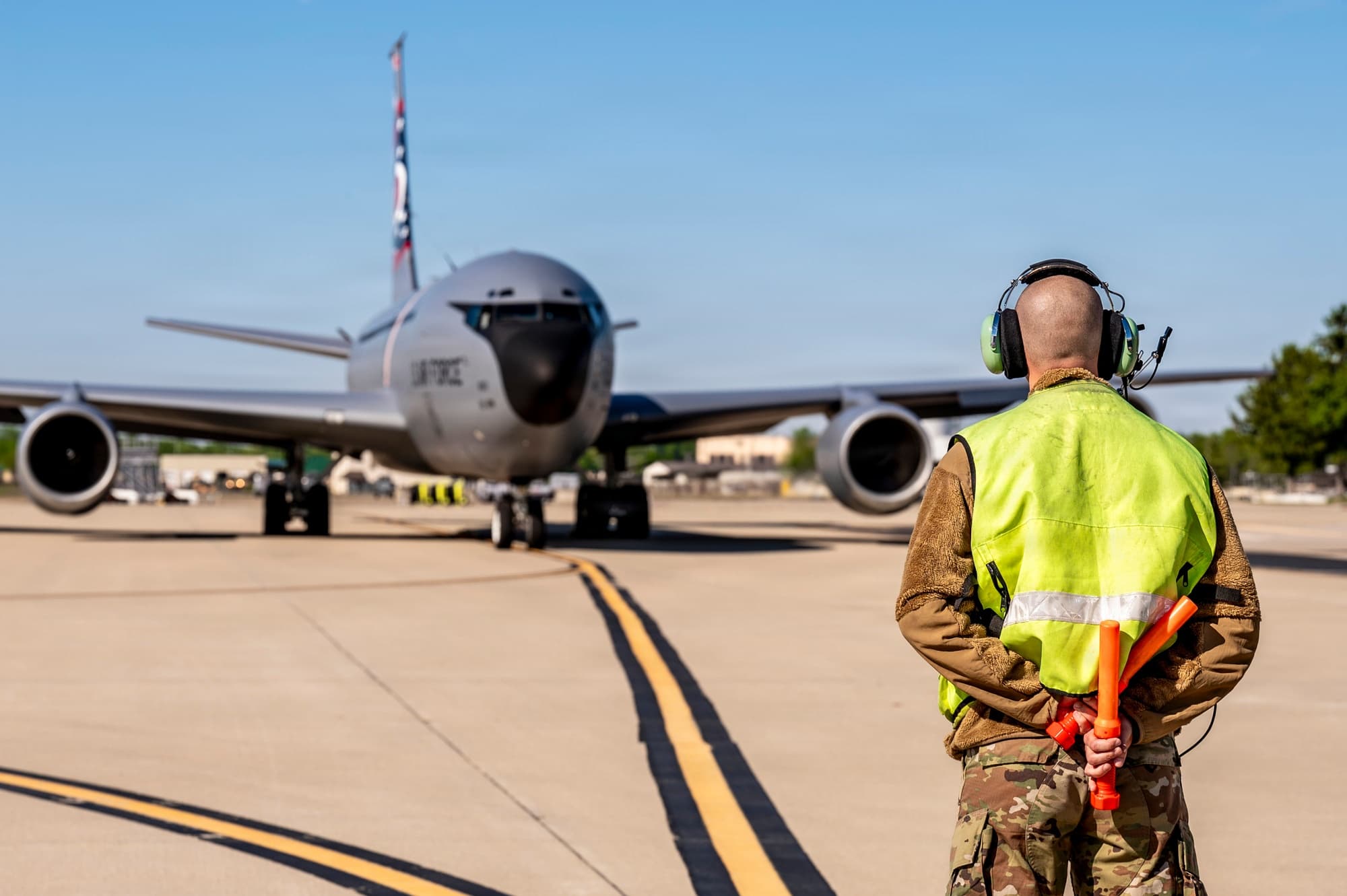
Photo: U.S. Air National Guard / Airman 1st Class Taylor Warehime, 121st Air Refueling Wing, DVIDS. Public domain.
If you have any flexibility on when you travel, when matters more than where, more than priority category, more than terminal selection. A Cat VI traveler on the BWI – Ramstein corridor in mid-October is fundamentally a different traveler from the same Cat VI traveler on the same corridor on December 22nd. The system isn't broken in December — it's just operating at multiples of normal demand against the same finite seat count.
This article is your 2026 month-by-month plan. We'll walk every month, flag the demand drivers, name the quiet windows, and tell you which destinations are easier and harder in each. By the end, you should be able to look at a 12-week stretch in your work schedule and pick the right two weeks to actually try Space-A.
For the underlying mechanics of seasonality (PCS cycles, DoWEA calendars, holiday traffic), see the Beginner's Guide. This post zooms in to month-level detail.
The four demand drivers that shape the year
Before the monthly breakdown, internalize these four signals. Every demand spike in the year is one or more of these:
- PCS season. The military relocates tens of thousands of families each summer. June through mid-August is the peak; May and September are the shoulders. Mostly Cat III, with a tail of Cat V.
- DoWEA breaks. Department of War Education Activity school calendar drives concentrated leisure travel from OCONUS families. Europe and Pacific each follow a region-wide calendar that doesn't drift much year over year.
- Holiday surges. Christmas / New Year, Thanksgiving, and to a lesser extent Easter and 4th of July. CONUS-to-OCONUS to visit family, OCONUS-to-CONUS for the same. Cat I–III filling rotators; Cat VI squeezed out.
- Real-world operations. Periodically a real-world tasking shifts seat availability for a few weeks. April 2026 is the most recent example — flight volume that month ran well above baseline across multiple hubs, with Ramstein seeing the most dramatic spike (several times its typical monthly volume) and other major terminals showing milder elevation. When you're using historical data to plan, weight the operationally-normal months more heavily than the outliers.
The 2026 calendar below combines all four into a practical month-by-month picture. Two reference widgets to anchor the year before we walk it month by month:
DoWEA school calendar — high-traffic windows
Expect heavy Cat IV demand on routes out of Europe and Pacific bases during these breaks.
SY 2025-2026
| Region | Thanksgiving | Winter | Spring | End of year |
|---|---|---|---|---|
| europe | Nov 27–28, 2025 | Dec 22, 2025 – Jan 2, 2026 | Mar 27 – Apr 3, 2026 | Early–mid June 2026 |
| pacific | Nov 26–28, 2025 | Dec 22, 2025 – Jan 2, 2026 | Mar 30 – Apr 3, 2026 | Early–mid June 2026 |
| americas | Thanksgiving week | Dec 22 – Jan 2 | Varies by district | Early June |
SY 2026-2027
| Region | Thanksgiving | Winter | Spring | End of year |
|---|---|---|---|---|
| europe | Nov 25–27, 2026 | Dec 21, 2026 – Jan 2, 2027 | Mar 26 – Apr 2, 2027 | June 2, 2027 |
| pacific | Nov 25–27, 2026 | Dec 21, 2026 – Jan 2, 2027 | Mar 26 – Apr 2, 2027 | June 2, 2027 (Korea: May 28) |
| americas | Nov 23–27, 2026 (varies) | ~Dec 21, 2026 – Jan 1, 2027 | ~Mar 29 – Apr 2, 2027 (varies) | Early–mid June 2027 |
Which category won the seat · trailing 12 mo
Check eligibility →| Category | Share of flights | Flights |
|---|---|---|
| Cat I | 0.4% | 18 |
| Cat II | 1.6% | 68 |
| Cat III | 6.9% | 302 |
| Cat IV | 2.3% | 100 |
| Cat V | 3.9% | 173 |
| Cat VI | 84.9% | 3724 |
Based on 4,385 roll calls with a recorded lowest-selected category. Roll call walks Cat I first, Cat VI last.
The DoWEA calendar shows you the spikes to design around. The Cat I–VI selection rates tell you the baseline odds at each priority across the network — useful to keep in mind when reading per-month notes below ("Cat VI window" looks different from "Cat III window," and the post-month math always traces back to these category-level rates).
January 2026
First half: avoid. Second half: gold.
- Jan 1–7. Holiday rush still unwinding. DoWEA winter break runs through Jan 2; spillover continues a few days past. Cat VI travelers face heavy backlogs at every major terminal.
- Jan 8–15. Transition week. Demand drops as schools resume. Cat VI selection rates improve daily.
- Jan 16–31. Quiet. Among the best Cat VI windows of the year. Pacific rotators run light; European corridors return to baseline. Excellent for retiree leisure travel.
Best destinations. Europe (post-holiday, pre-spring-break), Pacific bases (Yokota, Kadena, Osan), Hawaii.
Avoid. Anything that requires arrival before Jan 5.
February 2026
Among the quietest months at most CONUS hubs.
- All of February. Post-holiday, post-DoWEA winter break, pre-PCS, pre-DoWEA spring break. Real-world operations are typically light. PCS sponsors are starting to plan but haven't booked yet. Travis sees the most dramatic drop in flight count — by our trailing-year data, February is its lowest-volume month, which usually reads as a quiet backlog at the counter.
- Note: US civilian spring break starts to spool up in late February for some districts. Mostly affects the Caribbean Space-A routes, less so transatlantic and transpacific.
Best destinations. A strong month for Cat VI travelers willing to flex on destination. Europe and Pacific corridors run light. Hawaii is wide open.
Avoid. Nothing serious.
March 2026
First two-thirds great. Last two weeks brutal.
- Mar 1–14. Still quiet. US civilian spring break is dispersed; manageable demand bump on some routes.
- Mar 15–19. Transition. DoWEA spring-break-bound traffic starts arriving.
- Mar 20 – Apr 3. Heavy avoid window. DoWEA Europe and Pacific spring breaks run Mar 27 – Apr 3 and Mar 30 – Apr 3 respectively (2025-26 calendar). PCS families and recreational OCONUS travelers fill rotators. Cat VI gets squeezed at every European hub and most Pacific hubs.
Best destinations. Anywhere through Mar 14. After that, expect rough Cat VI math through early April.
Avoid. Mar 20 – Apr 3 for Cat VI travelers. Cat III can usually make a flight, but expect competition.
April 2026
First week brutal. Second half decent.
- Apr 1–3. Tail of the DoWEA spring break window. Continue to expect heavy demand.
- Apr 4–10. Transition. PCS families resuming OCONUS posts.
- Apr 11–30. Reasonable Cat VI window. PCS season hasn't quite started; DoWEA traffic has unwound.
Best destinations. Europe by mid-April, Pacific by mid-to-late April. Hawaii is reliable all month.
Avoid. First week of April for Cat VI.
May 2026
Cat VI sweet spot, with a creeping PCS shoulder.
- May 1–14. Excellent Cat VI window. Last quiet stretch before PCS season ramps.
- May 15–31. PCS shoulder begins. Selection rates start to fall on rotator routes, especially OCONUS-bound. Memorial Day weekend adds a leisure spike.
Best destinations. Anywhere by May 14. After Memorial Day, stick to CONUS and Hawaii for lower-stress Cat VI travel.
Avoid. Nothing major in early May. Memorial Day weekend is a leisure-travel surge.
June 2026
Peak PCS season begins. Avoid for Cat VI.
- June 1–30. The military relocates families in earnest. Rotators run at capacity weeks ahead. Pet spaces on the Patriot Express (PCS travelers only) book within hours of mission release. Cat VI travelers face much higher backlogs at major OCONUS-bound terminals. CONUS-to-CONUS trips remain easier — domestic Space-A is less affected by PCS.
Best destinations. CONUS-to-Hawaii and CONUS-to-Alaska remain reasonable. Domestic Space-A (e.g. Andrews to Travis, Travis to Hickam) is doable.
Avoid. OCONUS rotators (BWI – Ramstein, SeaTac – Yokota, Travis – Yokota, Travis – Kadena) for anyone in Cat IV or below.
July 2026
Peak PCS season continues. Worst single month for OCONUS Cat VI — and Hawaii is squeezed too.
- All of July. PCS reaches its absolute peak. Independence Day weekend adds a leisure spike. Summer family travel adds pressure across the network — including CONUS-to-Hawaii routes, which fill from both directions: CONUS-to-Hickam leisure demand on top of PCS travelers in transit through Hickam to Pacific posts.
- Pacific-specific note. Pacific PCS schedules compress into shorter windows than Europe — Yokota, Osan, Kadena, and Andersen (Guam) terminals fill especially fast in early July.
- Hawaii note. Don't assume Hawaii routes are an easy fallback in July. The Travis – Hickam corridor sees both the leisure surge and the PCS-transit surge concurrently.
Best destinations. Limited good options for Cat VI. CONUS-to-CONUS hops away from major Pacific gateways remain the easiest.
Avoid. OCONUS routes and Hawaii routes both. For Cat VI, July is best treated as a stay-home month if your only travel goal is a free flight.
August 2026
First half rough, second half opening up.
- Aug 1–15. PCS peak tail. Heavy OCONUS rotator demand.
- Aug 16–31. PCS season winding down. Selection rates improve dramatically by late August. Cat VI travelers see real openings on rotators by month's end.
Best destinations. By late August, Europe and Pacific rotators return to baseline. Plan late-August trips for Sept 1 departure to maximize quiet-window arrival.
Avoid. First two weeks if you're Cat VI heading OCONUS.
September 2026
A traditional shoulder-season window for Cat VI, but variable by terminal.
- Sep 1–14. Post-Labor-Day, post-PCS. Cat VI travelers typically see lighter backlogs at major terminals as the summer PCS wave finishes.
- Sep 15–30. Continued Cat VI shoulder window. DoWEA fall semester in session at home; OCONUS leisure travel is light.
- Caveat. Available historical data is patchier for autumn than for the rest of the year, and per-terminal flight cadence varies — Ramstein and Hickam tend to look stronger in September than Travis and BWI. Check the route-history widget for your specific route before committing to the month.
Best destinations. Most routes open up. September is widely treated as the post-PCS rest window before holiday travel kicks in.
Avoid. Nothing systemic. Watch for any real-world operational shifts (Pacific Command exercises typically run in autumn).
October 2026
One of the strongest Cat VI months — especially at CONUS hubs.
- All of October. Post-PCS, post-DoWEA settling, pre-Thanksgiving. Many travelers consider October the gold-standard Space-A month — strong seat availability, reasonable weather, low Cat VI backlogs.
- What the data shows. October stands out at Travis, Hickam, and Dover — flight counts and avg-seats-released both peak or near-peak for the year. Atlantic hubs (Ramstein, BWI) look more middle-of-the-pack in October than CONUS hubs do.
Best destinations. Most routes. October is when Cat VI retirees should plan their bucket-list trips.
Avoid. Nothing.
November 2026
Excellent through mid-month. Thanksgiving week is a sharp local spike.
- Nov 1–19. Continued strong Cat VI window. Calm before the holidays.
- Nov 20–30. Thanksgiving demand surge. Wednesday before and Sunday after Thanksgiving are the worst days. Cat VI travelers should avoid Atlantic rotators in particular. Travel one day earlier (Tuesday before Thanksgiving, Saturday after) for noticeably better odds.
Best destinations. Anywhere through Nov 19. After that, CONUS leisure travel only.
Avoid. Nov 24–30, especially Atlantic rotators.
December 2026
First half reasonable. Second half brutal.
- Dec 1–14. Quiet window. Post-Thanksgiving, pre-DoWEA winter break. Cat VI travelers can find reasonable flights on most routes.
- Dec 15–31. Christmas / DoWEA winter break runs Dec 22 – Jan 2 (2025-26 calendar) for Europe and Pacific. The full 17-day window is the worst Cat VI stretch of the year. Avoid OCONUS travel entirely if you have flexibility.
Best destinations. Anywhere through Dec 14. After that, only flexible-week CONUS hops are realistic for Cat VI.
Avoid. Dec 15 – Jan 5. Atlantic and Pacific rotators both. Even Cat III competition is high.
Day-of-week patterns within months
Day-of-week effects exist, but they're route-dependent, not network-wide. A given route's day-of-week pattern reflects its specific mission cadence, its official-traveler mix (rotators carrying PCS families have different day-of-week shape than cargo carrying mission requirements), and its leisure demand profile (weekend-warrior leave-status travelers stack different days).
Before optimizing your trip around a day of the week, check the actual historical pattern for the specific route you're flying. The widget below shows the canonical Pacific PE leg (Travis → Hickam) as a worked example — the same route-history widget is available for any tracked terminal pair from the Browse Flights board:
The seat-release heatmap at one major CONUS hub (Travis) gives a similar picture from the supply side — which weekday-month combinations historically released the most Space-A seats:
Travis AFB, CA · avg seats released by day-of-week × month
Terminal page →| Month | Sun | Mon | Tue | Wed | Thu | Fri | Sat |
|---|---|---|---|---|---|---|---|
| 2025-09 | 14 | 8 | 11 | 6 | 45 | 27 | 41 |
| 2025-10 | 21 | 61 | 65 | 37 | 57 | 60 | 48 |
| 2025-11 | 32 | 46 | · | 21 | 44 | 20 | 48 |
| 2025-12 | 50 | 33 | 49 | 61 | 51 | 3 | 9 |
| 2026-01 | 16 | 65 | 57 | 60 | 59 | 30 | 41 |
| 2026-02 | 73 | 14 | 25 | 37 | 46 | 48 | 41 |
| 2026-03 | 48 | 55 | 47 | 54 | 66 | 56 | 14 |
| 2026-04 | 19 | 45 | 46 | 64 | 64 | 63 | 37 |
| 2026-05 | 59 | 42 | 22 | 54 | 50 | 41 | 26 |
Trailing 12 months of roll-call data. Empty cells mean no flights flew that day-of-week in that month.
Pair the two widgets when you're picking a week: a heatmap tells you when seats appear, the route-history tells you when those seats actually clear on your specific route.
Quick-reference 2026 calendar
MONTH      OVERALL          NOTES
---------------------------------------------------------------
January    Mixed            Bad first week, strong second half
February   Strong           Quietest at most CONUS hubs
March      Mixed            Great through Mar 14, then DoWEA
April      Mixed            Bad first week, decent after
May        Good             Great through May 14, PCS shoulder
June       Avoid OCONUS     Peak PCS begins
July       Heavy avoid      Peak PCS + Hawaii squeezed too
August     Mixed            Rough first two weeks, opening late
September  Strong           Post-PCS shoulder, terminal-dependent
October    Strong           One of the strongest Cat VI months
November   Good             Strong through Nov 19, Thanksgiving spike
December   Mixed            Good first 14 days, brutal end
Questions we hear
FAQ
Is the calendar the same every year?
The PCS and DoWEA spikes are very consistent year over year. DoWEA dates shift by a few days as the calendar week changes (Thanksgiving is always the fourth Thursday; spring break and winter break drift a day or two). Real-world operations (like the April 2026 surge) are less predictable. See the DoWEA calendar table on the Beginner's Guide for the exact dates of the next school year.
What about CONUS-only travel — is it less seasonal?
Mostly yes. CONUS-to-CONUS Space-A is much less affected by DoWEA and OCONUS PCS than transatlantic and transpacific routes. CONUS-to-Hawaii is less affected than OCONUS routes most of the year — but the major Pacific corridors (Travis-Hickam in particular) feel the July squeeze because of CONUS leisure demand stacking on Pacific PCS transit. Outside of July and the DoWEA winter window, domestic and Hawaii-bound Cat VI travelers can fly almost any week of the year reasonably.
How much does the day-of-week matter compared to the month?
Less than the month, and the day-of-week pattern itself varies by route. The month effect — peak weeks vs. shoulder weeks — is the bigger lever. Once you've picked the right month, check the historical day-of-week pattern for your specific route from the Browse Flights board rather than assuming a network-wide rule. Some routes have clear weekday-vs-weekend patterns; others don't.
Are there any windows that look quiet but are secretly busy?
A few. The week before Memorial Day (right before the official PCS shoulder kicks in) is often booked heavy by sponsors arranging an early household-goods move. The week after Easter has variable demand because civilian spring breaks scatter. Mid-September can be quietly busy if Pacific Command runs an autumn exercise.
Does this calendar apply to Patriot Express specifically?
Yes, with more weight on the DoWEA spikes. PE rotators are predictable in their published timetables but their seat capacity stays fixed — when demand surges, the same number of PE seats has to clear a much larger backlog, so PE feels demand spikes harder than cargo missions (which can sometimes add capacity by switching aircraft or adding floor-load workarounds).
How early should I plan around the calendar?
Six months out for transatlantic and transpacific trips during the avoid windows. Two months out for shoulder weeks. As little as 60 days for the easy months (February, October).
Plan a trip in the right week
Pick your window, sign up at every relevant terminal, get notified when matching flights post.
Ready to plan your Space-A trip?
Save destinations, set alerts, and let Space-A+ auto-send sign-ups when matching flights appear.
Plan a trip →Related reading
Cat VI Space-A Travel: Realistic Expectations in 2026
What Cat VI Space-A travel actually looks like in 2026: real selection rates, route restrictions, and what success means as the lowest-priority traveler.
Tips & Data
Space-A from Hawaii: The Complete 2026 Guide
Everything to know about Space-A travel from Hawaii in 2026 — Hickam, Pacific routes, terminal operations, payments, pets, and what nobody tells you.
By Destination
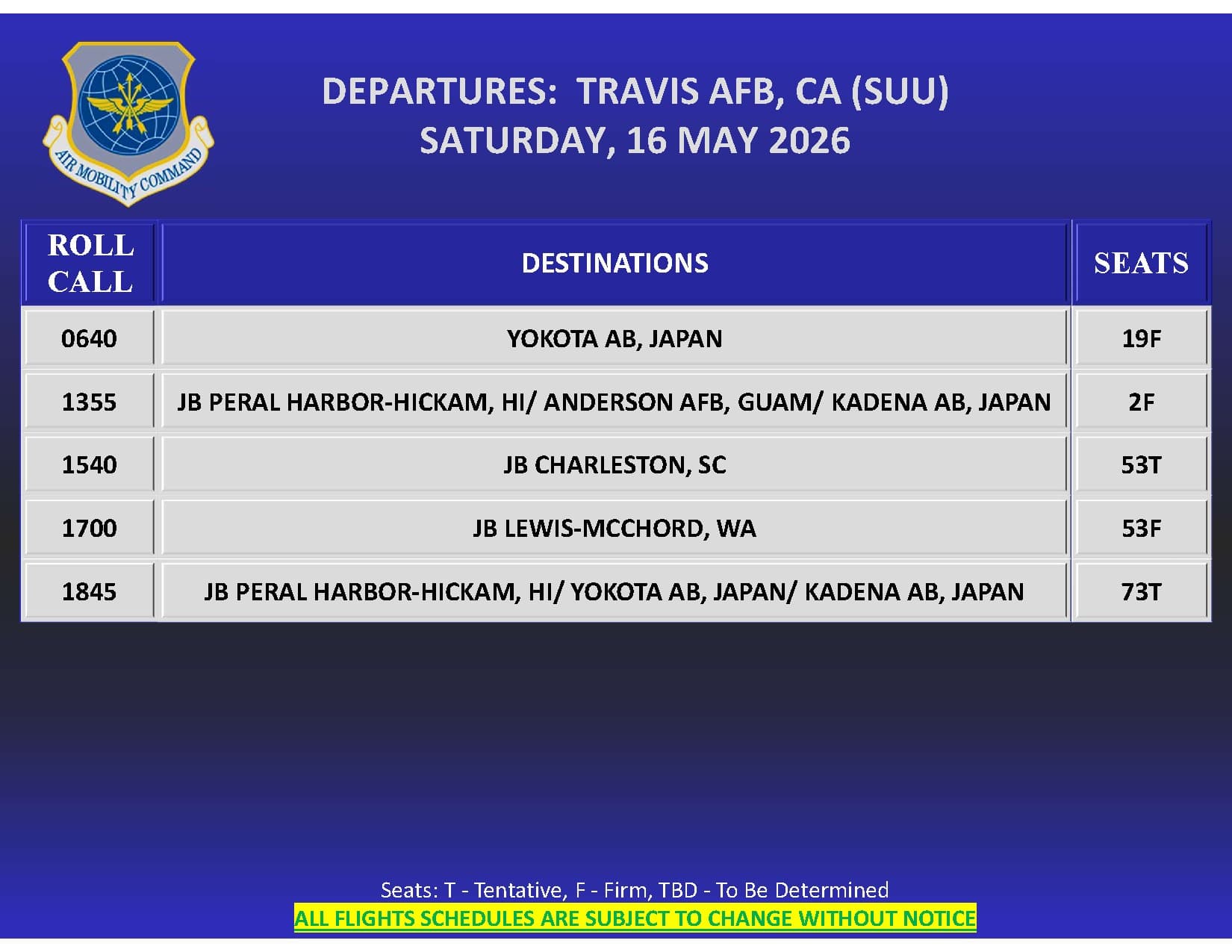
How to Read an AMC 72-Hour Schedule
How to read the AMC 72-hour schedule for Space-A travel — what each field means, when the board updates, and how to use it to plan a real trip.
Beginner Basics

5 Things First-Time Space-A Travelers Get Wrong (And How to Fix Them)
Five fixable mistakes most first-time Space-A travelers make — and the playbook for avoiding each one before your first flight.
Beginner Basics