Tips & Data
PCS Pet Travel on the Patriot Express: The Complete 2026 Guide
Who's eligible, what gear you need, what the fees are, and how to handle destination-specific entry programs (Hawaii, Japan, UK, Korea) for PCS pet travel on the Patriot Express.
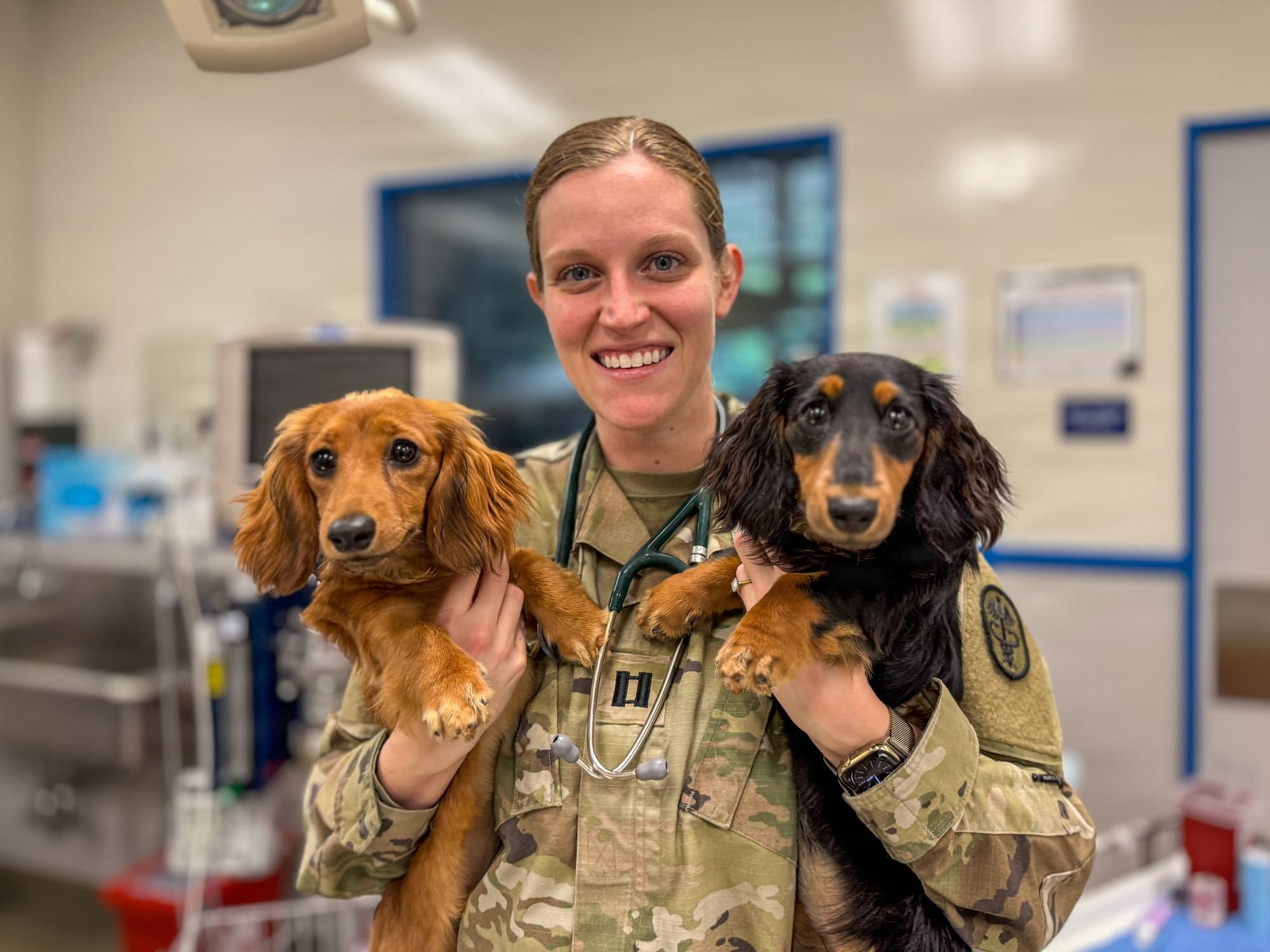
Photo: U.S. Army / Natalie Stanley, U.S. Army Garrison Okinawa, DVIDS. Public domain.
If you're PCSing on military orders with a pet, the Patriot Express is the standard option — fees apply but they're a fraction of commercial pet shipping, and the process is built for military families relocating with animals. This guide is the consolidated playbook for 2026: who's eligible, what gear you need, what the fees are, how to file for reimbursement, and how to handle the strict destination-specific entry programs that catch unprepared families every PCS cycle.
A reminder up front: this guide is for PCS-status travelers only. If you're a retiree, a dependent traveling on leave, or anyone else flying Space-A recreationally, you cannot bring a pet on military aircraft. We say this twice and then we'll move on, because it's the single most-asked question that catches Cat VI travelers off guard.
Who can bring a pet on the Patriot Express
Eligible: Active-duty service members executing PCS orders, with accompanying dependents listed on the orders. Per the official AMC Pet Travel Page and Military OneSource, only passengers traveling under PCS orders may ship pets — passengers traveling in a Space-Available status are not permitted to ship pets at all. The PCS travel itself is Space-Required (Space-R), duty travel, and the pet space is allocated against the official-travel allocation rather than the Space-A pool.
Not eligible:
- Retirees traveling Space-A. Even on the same Patriot Express flight, a retiree cannot bring a pet.
- Active-duty members on ordinary leave (Cat III Space-A). No pets.
- Dependents traveling unaccompanied on Space-A.
- Anyone traveling on cargo aircraft. Cargo airframes don't carry pets at all due to pressurization, oxygen, and temperature control limits in the cargo compartment.
If you're not PCSing and you want to travel with a pet to or from an OCONUS location, your options are commercial airlines with pet programs or a commercial pet-shipping service. The Patriot Express doesn't have a recreational pet option, and it isn't likely to add one.
The basic rules
Per the AMC Pet Travel Page and current DoD travel policy:
- Two pets per family maximum. A "family" is the sponsor plus dependents on the same orders.
- Domestic dogs and cats only. Other species — birds, reptiles, rabbits, ferrets — are not authorized.
- Combined pet plus carrier weight ≤ 150 lbs per pet. Pets at or near the limit need to be measured and weighed in the carrier you'll travel with, not estimated.
- All required vaccinations and health certificates must be current at time of travel and meet destination-country requirements.
- Brachycephalic (snub-nosed) breeds — bulldogs, pugs, Persians, Himalayans, etc. — carry higher heat-stroke and respiratory risk during travel. Effective 7 April 2026, AMC requires a signed Risk Acknowledgement Document (RAD) before a pet's space can be booked. Temperature embargoes may apply during summer.
Kennel specifications
In-cabin and cargo-hold kennels follow different rules.
In-cabin kennels. Allowed for small pets only. Maximum dimensions per current AMC Patriot Express guidance are 20″ L × 16″ W × 8½″ H — sized to fit under the seat in front of you. Soft-sided is allowed. The pet must be able to stand up, turn around, and lie down naturally inside the carrier. The kennel counts as your carry-on item.
Cargo-hold kennels. Required for any pet too large for in-cabin. Must be hard-sided and IATA-compliant. Per IATA Live Animal Regulations, ventilation must be provided on all four sides (totaling at least 16% of the four side panels), with openings sized for the species. Two-piece kennels must be bolted together with metal nuts and bolts — plastic snap latches and zip-ties are explicitly not acceptable substitutes. Door must be on the side (not the top). Live animal stickers and "this side up" arrows applied to both sides. Food and water dishes attached inside the kennel and refillable from outside.
Buy the kennel several weeks before travel and let your pet get comfortable in it. A pet experiencing the kennel for the first time on travel day is harder on everyone.
Fees
Per the AMC Pet Travel Page, Patriot Express pet travel fees are charged per pet, by combined pet plus carrier weight (treated as excess baggage):
- Under 70 lbs combined: $125 (one piece of excess baggage)
- 71–140 lbs combined: $250 (two pieces of excess baggage)
- 141–150 lbs combined: $375 (three pieces of excess baggage)
Fees are paid at check-in. Most major Patriot Express terminals have moved cashless — bring a credit or debit card; government travel card works. Confirm the current fee schedule with your TMO before travel, as AMC has the authority to update rates.
Reimbursement (effective 1 January 2024)
Originally authorized under Section 624 of the FY23 NDAA and implemented effective 1 January 2024, PCS-travel service members may be authorized reimbursement for one household pet's relocation cost as part of the PCS travel voucher. See the DAF PCS Pet Expense Reimbursement FAQs for the authoritative Air Force interpretation.
- CONUS-to-CONUS PCS moves: up to $550 reimbursable.
- OCONUS PCS moves (CONUS↔OCONUS or OCONUS↔OCONUS): up to $2,000 reimbursable.
- One pet per PCS move. A second pet's costs are still owed by the traveler — you cannot pool costs across two pets.
- PCS orders effective 1 January 2024 or later. Earlier moves are not eligible retroactively.
- Receipts required. AMC provides a pet-travel receipt at check-in. File it with the travel voucher along with veterinary fees, kennel purchase receipts, and other documented relocation costs.
Several years into this policy, awareness has grown but a meaningful share of PCS travelers still don't file. If you're moving and you paid pet travel fees, file the voucher — it's a real refund.
Reservations
Pet spaces are coordinated through your installation TMO at the same time you book your PCS travel itself. Standard timing:
- Spaces release roughly 90–120 days before mission execution. Earlier release for some routes, later for others.
- Summer PCS pet spaces tend to go quickly on the heaviest corridors (BWI → Ramstein, Travis → Yokota, SeaTac → Asia). Have TMO submit your request the day spaces open.
- Confirm the specific rotation. Pet allocation varies by aircraft and date.
- Plan a fallback. If you can't get pet space on your intended rotation, commercial alternatives (United PetSafe, ANA, JAL, Lufthansa Animal Lounge depending on destination) are the backup. Price them in advance so you're not making the decision under pressure.
Service animals and ESAs
- Service animals — dogs trained to perform specific tasks for individuals with disabilities — travel free on the Patriot Express, in cabin or cargo, under ADA rules. They don't count against the two-pet family limit. Bring documentation of training and the disability.
- Emotional Support Animals (ESAs) — per the Stars and Stripes coverage of the AMC policy change, effective 23 July 2021 AMC treats ESAs as regular pets. They count against the two-pet family limit and pay the standard fees. Only dogs and cats qualify as ESAs for travel. (The AMC change followed the DOT's January 2021 final rule that removed ESAs from the airline service-animal definition.)
Destination-specific entry programs
This is the part that catches families off guard. Several common PCS destinations have multi-week to multi-month pet entry programs that require lead time you don't have if you wait for orders. Start the paperwork the day your orders are confirmed — and ideally several months before that if you anticipate the move.
Hawaii — the 5-Day-Or-Less program
Hawaii has one of the world's strictest pet entry programs. The state operates a rabies-free quarantine system, and pets entering Hawaii face either a short release window or a 120-day quarantine at the owner's expense.
The 5-Day-Or-Less program allows direct release within 5 days of arrival (or direct airport release in Honolulu, if all documents are received well in advance). Per the Hawaii Animal Industry Division 5-Day-Or-Less FAQ, the program's hard requirements are:
- ISO 11784/11785 microchip implanted before the rabies vaccination.
- Two rabies vaccinations ever in the pet's life (the second more than 30 days before arrival).
- One OIE-FAVN rabies blood test with a titer ≥ 0.5 IU/ml. Test result is valid for 36 months from the day the lab received the sample.
- 30-day waiting period between the date the laboratory received the blood sample and the pet's arrival in Hawaii.
- Health certificate within 14 days of arrival.
- Documents received by the Animal Quarantine Station more than 10 days before arrival to qualify for Direct Airport Release in Honolulu. Documents received less than 10 days before arrival trigger a higher release fee.
The penalty for skipping the paperwork: up to 120 days of quarantine at the owner's expense. Not a metaphor. Not optional. The Hawaii Animal Quarantine Station charges daily facility fees throughout, and missed FAVN deadlines can derail the start of a PCS by weeks while the pet works through quarantine.
Build at least 60–90 days of margin even though the 30-day FAVN wait and 10-day submission window look short on paper — vet appointment availability, the rabies-vaccination interval, lab turnaround time, and USDA APHIS endorsement all stack up.
Full official rules: Hawaii Animal Industry Division.
Japan
The most complex of the common PCS destinations. The full process can take 7+ months from start to finish, so plan accordingly for Yokota, Kadena, and other Japanese installations. Per the USDA APHIS Japan pet travel page and the Japan MAFF Animal Quarantine Service:
- ISO microchip implanted.
- Two rabies vaccinations after the microchip, with the second given at least 30 days after the first.
- FAVN serology test after the second vaccination. Results must show ≥ 0.5 IU/ml. Test result is valid for 2 years from the sampling date.
- 180-day waiting period between the date the rabies titer blood sample was collected and the pet's arrival in Japan.
- Advance Notification Form submitted to the Japanese Animal Quarantine Service at least 40 days before arrival.
- Health certificate issued within 10 days of departure, endorsed by USDA APHIS.
Start the process the day you receive orders, or earlier if you anticipate a Japan PCS. There is no compressed version of the 180-day wait.
South Korea
Less complex than Japan but still requires lead time. Per the USDA APHIS Korea pet travel page:
- ISO 11784/11785 microchip implanted before the rabies vaccination.
- Current rabies vaccination.
- FAVN test drawn at least 30 days after rabies vaccination, showing ≥ 0.5 IU/ml from an approved lab; sample must be drawn within 24 months of arrival. Unlike Japan, Korea does not impose a post-FAVN waiting period — your pet can travel as soon as the result is in hand.
- Health certificate within 10 days of arrival, USDA-endorsed.
Plan 2–3 months minimum to absorb vet appointment availability and FAVN lab turnaround.
United Kingdom
Operates under the UK Pet Travel Scheme. Comparatively straightforward but still requires lead time:
- ISO microchip implanted before rabies vaccination.
- Current rabies vaccination (pet must be at least 12 weeks old at time of vaccination).
- 21-day wait after rabies vaccination before travel.
- Tapeworm treatment (dogs only) given by a vet between 24 and 120 hours before arrival.
- Health certificate from USDA APHIS within 10 days of travel.
Plan 1–2 months from start to entry.
Germany and most of mainland Europe (EU)
EU pet entry is broadly harmonized, which covers the bulk of PCS pet moves through Ramstein. Per the USDA APHIS Germany pet travel page and the Your Europe pet travel reference:
- ISO microchip implanted before rabies vaccination (out-of-order = vaccine is invalid; restart the cycle).
- Current rabies vaccination after the microchip.
- 21-day wait after the first or primary rabies vaccination before travel.
- EU Health Certificate from USDA APHIS within 10 days of travel.
A typical CONUS-to-Ramstein PCS pet timeline runs roughly a month or two of paperwork once the microchip-then-vaccinate sequence is in motion — shorter than Japan or Korea, but still requires lead time.
Australia and New Zealand
Among the strictest pet entry programs worldwide. Multi-month process with limited port-of-entry options. Per the USDA APHIS Australia pet travel page, pets from Group 3 countries (which includes the United States) face a mandatory 180-day waiting period after a passing Rabies Neutralising Antibody Titre Test (RNATT) plus a 10-day quarantine at the Mickleham facility near Melbourne — and most families end up budgeting 6 to 10 months end-to-end. If you're PCSing to Australia or New Zealand on military orders, work with both your installation TMO and a specialized pet-shipping coordinator from the day of orders. The compressed timelines of typical PCS notification (60–90 days) are not viable for Australia/NZ entry without preparation that began earlier — sometimes military families absorb a temporary commercial-shipping bridge through a third country.
Other destinations
USDA APHIS maintains the authoritative country-by-country requirements: USDA APHIS pet travel. Always cross-check with the destination country's embassy or the receiving installation's vet clinic before booking, since requirements can update.
A timeline you can follow
For a PCS to a destination with a strict entry program (Hawaii, Japan, UK, Korea), the timing roughly works:
- Day 0 — orders confirmed or anticipated. Make a vet appointment within 2 weeks. Verify microchip is ISO-compliant; replace if not. Confirm rabies vaccination is current; revaccinate if needed.
- Week 2–4. Microchip implanted (if new). Rabies vaccination administered (if needed).
- Week 4–8. First FAVN draw. Wait for results.
- Week 8–12. Second FAVN draw (Hawaii) or wait period (Japan, Korea). Begin paperwork submission to destination authority.
- Week 12–16. Confirm receipt of submission packet. Begin TMO coordination on rotation booking.
- Week 14+. Schedule final pre-travel health certificate (within destination's required window — 10 to 14 days before travel).
- Travel day. Bring all paperwork (original health certificate, FAVN results, rabies records, microchip number, advance-notice confirmations) to terminal check-in.
Japan-specific PCS pet travel starts the rabies and FAVN sequence at week -28 minimum, with the 180-day clock running from the FAVN draw date.
Common mistakes
A few patterns to avoid:
- Implanting the microchip after the rabies vaccination. The chip must be implanted before the rabies vaccination that counts for entry. If the chip is implanted after, you may need to revaccinate to make the dates valid.
- Using a non-ISO microchip. Most current US vets default to ISO 11784/11785 chips, but older chips (pre-ISO-standard adoption) may not read at destination customs. Confirm your pet's chip standard at the vet; replace if needed.
- Booking commercial as a fallback at the last minute. Commercial pet shipping during summer PCS surge is expensive — often well into four figures internationally — and airline-specific embargoes can kick in during heat waves. Have a commercial backup priced and on standby weeks ahead, not days.
- Treating the destination as a single decision-point. Pet entry is multi-step. A missed FAVN at week 8 doesn't reveal itself until you try to enter Hawaii at week 30 and get sent to 120-day quarantine. Build verification checkpoints into your timeline.
What to bring on travel day
Carry — don't check, don't pack in luggage — the full document set:
- Original health certificate (and USDA-endorsed copy if required).
- Rabies vaccination records.
- FAVN test results (original lab report, not just the vet's summary).
- Microchip implant record.
- Destination advance-notice confirmations (Japan AQS form, Hawaii submission confirmation, etc.).
- Pet's passport if your destination uses one (UK, EU).
At the terminal check-in, allow extra time for pet processing. Bring water for the pet (but no food in the 4 hours before travel — most vets recommend an empty stomach). Bring absorbent pads for the kennel. Bring a familiar blanket or toy.
Questions we hear
FAQ
Can I bring my pet on a Space-A flight?
Only if you're PCSing and the flight is the Patriot Express. Retirees, dependents on leave, and other recreational Space-A travelers cannot bring pets on military aircraft. Cargo flights don't carry pets at all.
Can I bring an emotional support animal on the Patriot Express?
ESAs are treated as regular pets since 23 July 2021. They count against the two-pet family limit and pay the standard fees. Only dogs and cats qualify as ESAs for travel.
Do service animals pay fees?
No. Service animals — trained to perform specific tasks for individuals with disabilities — travel free in cabin or cargo. They don't count against the two-pet family limit.
My pet is 155 lbs combined with kennel. Can I still fly?
No. The 150-lb cap is firm. Options: train the pet down through diet and exercise before travel, switch to commercial (some airlines accept higher weights), or use a specialized pet-shipping service.
Can I bring three pets if I have two on orders and one is for a family member separately stationed?
Two pets per family is the rule. The family is defined by the sponsor's orders. If a different family member has their own qualifying orders, they can each bring their two — but you can't pool.
How much will Hawaii quarantine cost if I miss the 30-day deadline?
The state-run Animal Quarantine Station charges per day at rates that have run several hundred dollars daily in recent years. A 120-day quarantine can run tens of thousands per pet. There are no exceptions for missed deadlines — the 30-day submission window is firm.
Can I file for the $2,000 OCONUS reimbursement on top of $550 CONUS?
No. The $2,000 OCONUS cap applies if your move crosses the CONUS boundary in either direction. The $550 CONUS cap applies to moves that stay within the contiguous US (or specifically between CONUS bases). One reimbursement, per move, for one pet.
My pet flies in cargo. Are they warm? Pressurized?
Patriot Express commercial aircraft carry pets in pressurized, temperature-controlled cargo holds. The hold is the same environment as the rest of the aircraft for temperature and air. Loading and unloading on the ramp during weather extremes is the main risk; AMC will embargo pet travel in extreme heat.
Can I see my pet during the flight?
No. Pets in cargo stay in cargo. In-cabin pets remain in their carrier for the full flight. Plan accordingly with food, water, and absorbent pads in the carrier.
Plan a PCS with a pet
Coordinate your pet space with TMO at the same time as your PCS travel. Start destination-specific paperwork the day orders are confirmed.
Ready to plan your Space-A trip?
Save destinations, set alerts, and let Space-A+ auto-send sign-ups when matching flights appear.
Plan a trip →Sources & references
Every operational rule cited above traces back to one of these authorities. When a rule changes mid-cycle, the source page is the right place to verify before booking:
AMC pet travel policy
- AMC Pet Travel Page — eligibility, fees, kennel rules, booking timing, current fee schedule.
- Defense Travel Management Office: new RAD requirement (April 2026) — Risk Acknowledgement Document mandate for brachycephalic-breed pet bookings.
- Military OneSource: Patriot Express Passenger & Pet Transport — PCS-only eligibility, family/species/weight limits.
- Stars and Stripes (2021): AMC's ESA policy change — 23 July 2021 effective date for treating ESAs as pets.
PCS pet reimbursement (FY23 NDAA § 624)
- Army public-affairs note: DoD approves PCS pet expense reimbursement — $550 CONUS / $2,000 OCONUS, one pet per move, effective 1 January 2024.
- DAF PCS Pet Expense Reimbursement FAQs — authoritative Air Force interpretation.
Destination-specific pet entry
- Hawaii Animal Industry Division: 5-Day-Or-Less Program FAQ and main quarantine page.
- USDA APHIS: pet travel to Japan and Japan MAFF Animal Quarantine Service.
- USDA APHIS: pet travel to Korea.
- UK gov: bringing your pet to Great Britain.
- USDA APHIS: pet travel to Germany and Your Europe: travelling with pets in the EU.
- USDA APHIS: pet travel to Australia.
- USDA APHIS country-by-country pet travel index — start here for any destination not covered above.
Kennel specifications
- IATA Live Animal Regulations — container requirements — ventilation, hardware, and labeling rules referenced by AMC.
Related reading
Space-A from Hawaii: The Complete 2026 Guide
Everything to know about Space-A travel from Hawaii in 2026 — Hickam, Pacific routes, terminal operations, payments, pets, and what nobody tells you.
By Destination
How Space-A Actually Works in 2026
How military Space-A travel really works in 2026 — sign-up windows, roll call, the new DAFI rules, and what nobody tells first-timers.
Beginner Basics
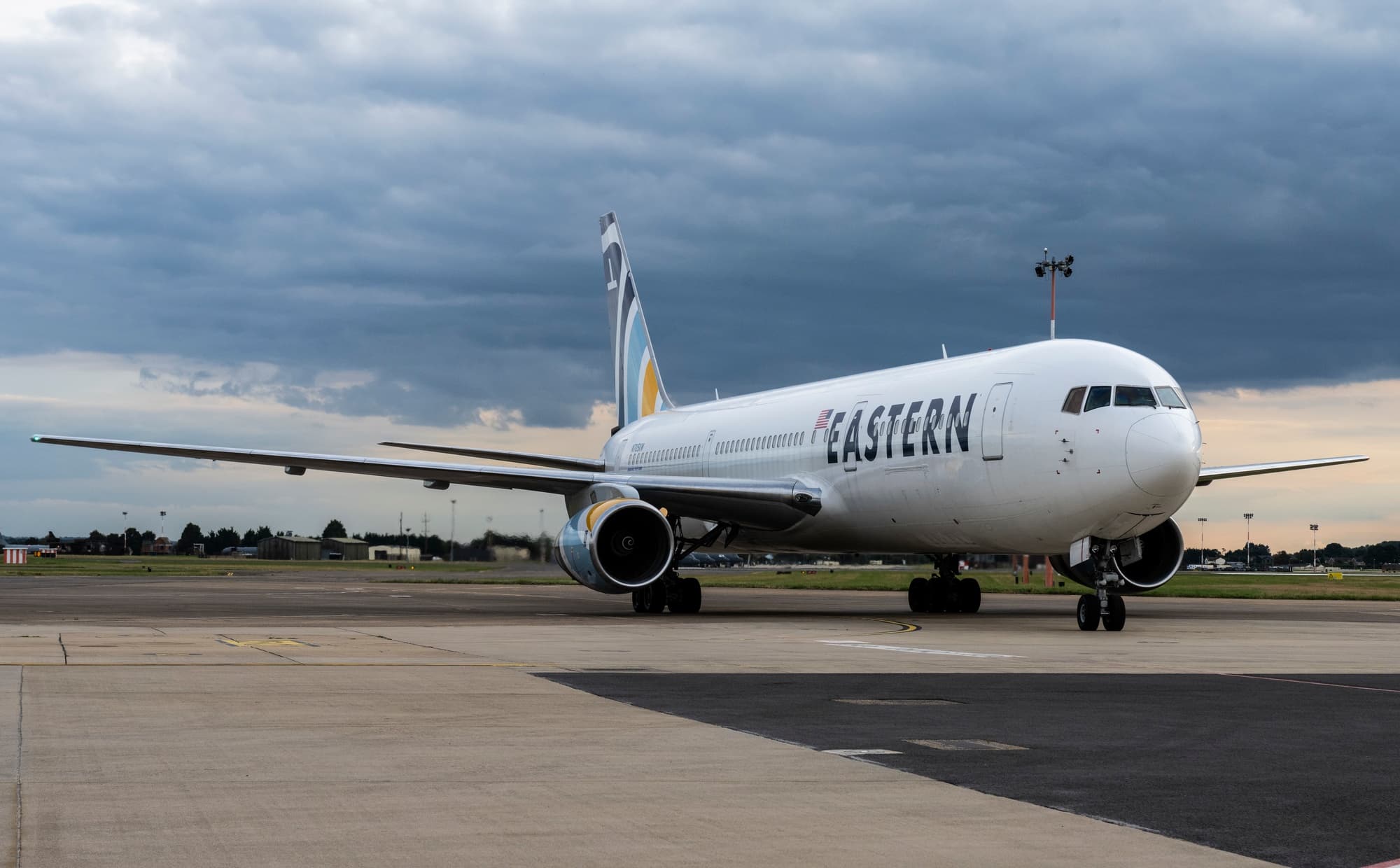
Patriot Express vs. True Space-A: What's the Difference in 2026
AMC's Patriot Express commercial rotators and cargo Space-A missions share a sign-up but almost nothing else. The operational comparison — schedule, fees, pets, baggage, delays, boarding priority.
Tips & Data